
Time’s effects on…dead whales

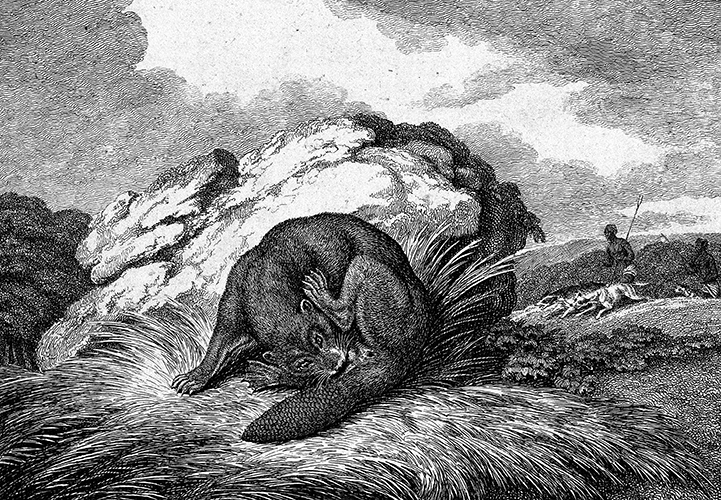
There is a marvellous thing called whale fall. If a whale dies in deep waters, where fewer scavenger species exist, the carcass becomes a mini ecosystem, providing food and shelter for other organisms (sharks, prawns, worm-like things, crabs, clams, fishies) for decades. They become, as @girlprinter observed, nature’s food trucks, coming soon to a deep sea zone near you. First, the soft tissue is eaten—perhaps 40-60kg of soft tissue per day, for up to two years. Then, other animals begin to colonise the bones and consume the tissue left behind by larger scavengers. Finally, bacteria break down the fat and oils left in the bones, a stage that can last 50-100 years. (Whale bones are very porous, so they can hold a lot of oil). Eventually the skeleton reaches the sea floor, free of flesh.

Sometimes, though, a dead whale washes up on a beach. Museums like to collect whale skeletons but don’t have a century to spare on the process—so they speed things up a bit. First, the carcass is moved with bulldozers, cranes and semitrailers to a worksite. The flesh is removed and the bones macerated (soaked in water to remove soft tissues) and degreased to remove oil molecules. There are a variety of degreasing methods; often the bones are immersed in tanks containing a bacterial solution. The bacteria eat up the fats and oils over several months. This process is often conducted in facilities located near sewage or water treatment plants, where the locals are already inured to strange pongs. The whole process—carcass to skeleton—can still take a few years.

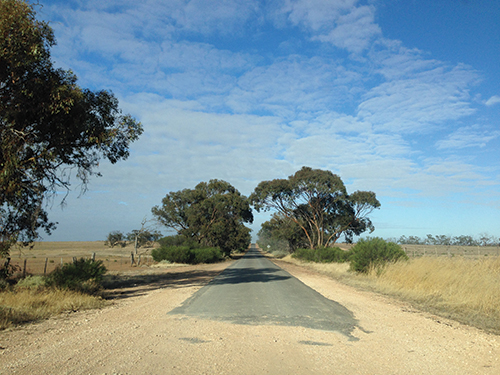
The dead whale that washed ashore in Warrnambool is too difficult to access, so it can't be taken away to the macerating pits.

The dead whale that washed ashore in Warrnambool is too difficult to access, so it can’t be taken away to the macerating pits.

Read about the treatment of a whale carcass found on Prince Edward Island, by staff at the Canadian Museum of Nature. Some video, also!

Issue two of Materiality (the TIME issue) will be published in late June or early July. Stay tuned!

From Materiality #1: Words in Their Hands—Craft and the Type-Racing Craze of 1886, by @girlprinter

Hand-setting metal type—placing individual letters one by one into a composing stick to form words, then sentences, paragraphs, and pages—sounds an unlikely spectator sport. But in 1886, a craze for typesetting races swept the United States, fanned by dime museum promoters who introduced a class of compositor-printers to the general public and made them famous. These men were known in the trade as Swifts—compositors capable of amazing feats of speed and accuracy. They had been racing each other on shopfloors, in union halls and saloons since the advent of industrialisation. Long shifts, alcohol, stimulant use, braggadocio and pride drove compositors to compete with each other for money, prizes and acclaim.  Gambling on the outcome of races gave every man on the floor a stake in the game. In his book, The Swifts: Printers in the Age of Typesetting Races, Walker Rumble writes “By the mid 1880s, journeymen Swifts resembled mythic Irish elks and modern athletes. They had become the best ever on earth at what was becoming irrelevant.”

The rapid growth of industrialised cities saw a proliferation of newspaper titles and book production houses. Typesetters formed a working class elite protected by strong union representation and by a working culture that fostered independence and mobility. A tramping journeyman with a union card could be assured of employment in any city he cared to make his temporary home. Reputations spread nationally, and the best of the best toured the country to race against hometown talent. The most famous of these Swifts was George “The Velocipede” Arensberg, who, on 19 February 1870, set 2064 ems  of solid minion type in a single hour. (In this era, 700 ems an hour was considered average.) Money was a primary motivator: a winning Swift could pocket a kitty of $500 or even $1000 at a time when wages might be $30 per week.  But prestige and honour were equally important. Rumble notes that type-racing awards of the late nineteenth century were as “outrageously rococo as […] printing’s beloved circus-poster typography”. Engraved solid silver composing sticks, trophies, gold watches, print encyclopaedias and medallions featuring Benjamin Franklin were common prizes. One third-prize winner, he notes, was awarded a thermometer. Thomas Rooker, an ace compositor at the New York Tribune, wore diamond-studded shirtfronts, presumably the spoils of his success at the case.

What made the year 1886 unique in the history of type-racing was that it saw the sport enter the public arena in a blaze of publicity, thanks to entertainment promoters and dime museums. The dime museum was not an institution of professional scholarship or curatorial rigour. They combined public edification with sensationalist amusement—an educational model of a gynaecological office, for instance, alongside a sideshow act involving a tattooed man wrapped in snakes. It was a product of an emerging mass culture of consumption, a culture with an increasingly insatiable appetite for amusements. Walker Rumble writes, “Printers who considered themselves a working-class elite might easily confuse the onset of a culture of popular amusement for a pathway toward mainstream bourgeois respectability.” These working class men could hardly have thought otherwise, with the all the financial rewards and social kudos on offer.

Chicago’s South Side Dime Museum hosted a seven-day typesetting tournament in January 1886, featuring New York Swifts Joseph McCann and William Barnes. Racing for the Diamond Medal and Championship of the World, the New Yorkers battled six local Swifts in shifts throughout the week.  Barnes won after an exhausting struggle during which he wowed the crowd by setting type with his cases reversed (the uppercase or capital letters in the lower position, and the lowercase letters in the upper), setting type blindfolded, then setting type blindfolded with his cases reversed. The spectacle was repeated in February in Boston at Austin & Stone’s Museum, billed as “The Typesetting Championship of New England”. The Museum’s lecture hall was transformed into a replica of a big city daily newspaper’s composing room so as to ensure “an authentic feel to the place”.

Following the six-day contest was the barely publicised “Lady Typesetter’s Match” which applied the exact same rules and format of the men’s competition. When the men raced, the usual resident monkey display was temporarily relocated. But the monkeys were returned for the women’s races.  Despite this added distraction, the women set type faster and more consistently than the men over the course of the six days. In spite (or perhaps because) of this, it was the first and last time women ever raced publicly.

In March, the Philadelphia National Championship was held at Bradenburgh’s Ninth and Arch Street Dime Museum.  “Thousands of people who are strangers to the secrets of the composing and press rooms,” declared the publicity materials, “will gladly welcome this opportunity to see the deft-fingered champions of the typographic world present the moulded thoughts of the writers of the day in plain English print.”  The lavish competition was won by Cincinnati compositor Alexander Duguid, who set type faster than anyone ever had, or would. Surprisingly, the craze that began in January was over by the middle of the year. The International Typographic Union banned public racing in response to a threat that had been in plain sight so long it was rendered invisible. That threat was Ottmar Mergenthaler’s Linotype, a typesetting machine that, for the first time in history, actually worked.

By the mid-nineteenth century, inventors and entrepreneurs had revolutionised printing machinery in all aspects of the industry except composition. The Swift William Barnes was certain that inventors could not devise “a piece of mechanism that can think, and the numerous efforts to secure this phenomenon proves the sure foundation on which the compositor’s art is based”. Which is not to say that efforts weren’t being made. Typesetting equipment was installed in New York printing houses as early as 1855, but generations of different mechanisms were found over and over to be far more trouble than their worth. Mark Twain, himself a former compositor, famously lost a good portion of his fortune investing in a typesetting machine which, like all before it, failed. Mergenthaler’s Linotype was a radical rethinking of the typesetting problem. Rather than devise a machine that retrieved and then redistributed type, his machine cast metal into solid lines of type, which, once printed, were melted back into reusable metal.

The union had good reason to put an end to public typesetting races. Bosses were constantly looking to increase profits. The composing room lagged behind advances in other areas of production. Until the problems that plagued mechanised typesetting could be overcome, getting men to work faster was the only way to improve productivity. The Swifts’ performances set a dangerous precedent. In the past, racing was conducted within the confines of the industry. Out in public, Swifts flaunted their exceptional skills, drawing unwanted attention to their less proficient rank and file colleagues back on the shopfloor. Perhaps surprisingly, the union was still focusing more on protecting its compositors from productivity demands and the threat of female labour than the inevitability of mechanisation. As late as 1885, the Inland Printer dismissed reports of a reliable typesetting machine as “rubbish [circulated by] smart alecks of the New York press”. But in 1886, coincident with the heyday of the public typesetting races, the first Linotypes were installed at the New York Tribune, and the other newspapers and printing houses quickly followed.

The Linotype killed hand composition, and along with it, a particular type of craftsman. In 1893, Lee Reilly averaged 8,567 ems an hour on the Linotype, a week’s work for a hand-setting compositor. By 1899, William Henry Stubbs averaged 12,021 ems an hour. Neither man, however, was considered a Swift. The speed and prowess attributed to the Swifts was now bestowed upon the machine. The Linotype itself was the star, men its mere operators.

Industrialisation changed the relationship between a man and his tools and the materials of his craft. In the hand-setting era, printers shaped both the written word and the visual elements of a page. The composing stick was an extension of the human hand—a printer’s expertise lay in his ability to communicate well using type, rule, images and white space. With the introduction of the Linotype, men served the machine and were directed by a new breed of specialists – initially known as printer-architects, later, as graphic designers. No longer free to “write in the stick” (correct copy on the fly) or let loose with decorative ornamentation, machine operation stripped the compositor of autonomy intrinsic to craft. The great public typesetting races of 1886 were a spectacle of precision and speed, but, unbeknownst to anyone, also the last great hurrah for the printer-compositor as an elite among working men. Never again would a printer be presented with a giant emblem of flowers arranged into the shape of a composing stick. Never again would fame be found in an activity so mundane, yet profound.

Postscript

Douglas Wilson’s Linotype: The Film premiered in February 2012. If, like me, you are fan of late nineteenth century industrialisation (with a particular focus on printing and the allied trades) the announcement of this film was hugely exciting. Through interviews, found footage and some lovely graphics, Wilson tells the story of the life and death of the Linotype, with particular focus on its death. In one scene, a long-time Lino operator talks of how heartbroken he is to scrap a well-loved machine. In the background, a crane lifts the machine from a truck bed and proceeds to (somewhat gratuitously) smash it over and over onto a junk heap, crushing its precision-engineered carcass into smithereens.

We meet Carl Schlesinger, Lino operator at the New York Times for 30-something years, who filmed the last day of Linotype operation at the newspaper before its conversion to phototypesetting. We meet Larry Raid, who runs his annual Linotype University on his property in Denmark, Iowa, home also to Pry Plastics and a fully operational steam railway. Wilson talks to printers still using Linotype: some, 90-year-old men with delicate, gnarled hands and others, young bearded hipsters in band t-shirts and plaid shirts.  All of them focus on how to maintain these machines long after they were officially declared obsolete. All are passionately committed to the special qualities letterpress possesses, unequalled among printing techniques. For these printers, the ability to make type allows them autonomy not available to printers reliant on hand-set type, which continually wears out and requires replacement. It is also an autonomy not known by printers using photopolymer plates who, though they have every digitised typeface known to man at their fingertips, are still reliant on film negatives and the skill of their platemaker.

Strangely, it was this same freedom that hand compositors mourned with the introduction of the Linotype in the 1880s. Somehow, in the almost-century between the birth of the Linotype and its slow death, craftsmen took hold of the new technology and made it theirs. What was initially alienating and an offense to the sensibilities of hand workers became another tool that proud craftsmen mastered. In his film, Schlesinger’s colleagues at the Times farewell their machines, left cold and silent, with evident sadness. I don’t think I was the only one to tear up as the machine was being pounded into the scrapheap. The crowds urging on the Swifts in 1886, Howard Gorin who saved two machines at the auction of equipment from the Boston Printing Office in 2011 when his museum only requested one —these moments point to one thing. At moments of great change—1886, now—craftsmen will mourn the loss of whole cultures formed around skills particular to a craft. But the human urge to make things well lives on, perhaps just in smaller, tighter corners in our increasingly alienated, wasteful culture.

Carolyn Fraser is a letterpress printer and writer. In 2005, after eleven years in the US, she shipped a 20-foot container of letterpress equipment to Australia and re-established Idlewild Press in Melbourne. In addition to publishing artist books, Carolyn teaches letterpress printing and is a regular contributor to Uppercase Magazine. She tweets and posts to Instagram as @girlprinter and can also be found online at www.carolynfraser.com and www.facebook.com/IdlewildPress.

This article appeared in Materiality #1: Book. If you enjoyed it, you might enjoy the whole shebang! Purchase a copy at the pinknantucket press shop. (Available in hardcopy and digital versions, $10/$3.95).

Time’s effects on…time capsules

Of all the queries I receive as a conservator, my number #2 most hated is “we’re going to bury a time capsule, can you give us some advice?” (My #1 most hated is “we’ve just pulled up the lino and found some old newspapers and want to frame them. Can you give us some advice?”).

I don’t have anything against time capsules per se, it’s just that inevitably the time capsule is scheduled to be buried the next day and time capsules are something that benefit from a little forethought. So the ensuing conversation becomes very hard—because what can you really do to help, by tomorrow?

(NB Newspapers from under the lino I hate because they are usually already badly degraded and are therefore even more difficult to deal with than they might have been otherwise. Also, poor-quality newsprint doesn’t survive exhibition well. So I end up feeling like a massive killjoy).

To what hazards might a time capsule be subject, over the years? Time capsules are usually buried or sealed up in building cavities. Dry ground (or wall cavities) might be relatively safe—though not immune from floods, contamination, excavation and the like. Wetter soils will more actively attack anything buried within, promoting rust and biological activity—though of course we have on occasion retrieved amazingly preserved accidental time capsules from bogs, in the form of human remains. The unusual conditions within peat bogs—a lack of oxygen, low temperatures and acidic conditions—combine to effectively tan the skin and hair, leaving them relatively intact. (The bones, on the other hand, are often destroyed by the acidity of the peat). But earth is also home to bugs and worms and voles and things, which might also get into your capsule if it is not well-sealed.

So time’s effects on time capsules will be dependent on what your time capsule is made from, and how well it is made. An iron, wooden or cardboard box is unlikely to survive rain, flood, or rising damp. Some plastics might last the distance—the especially un-environmentally-friendly ones, that resist biodeterioration—but a time capsule is only ever as strong as its weakest point. If it’s not well sealed, water and bugs and bacteria will get inside and lay waste. Well-sealed copper alloys or stainless steel (welded shut, even) are often recommended.

Next—what’s going in this perfect capsule? What will the people of tomorrow’s tomorrow’s tomorrow find interesting? More importantly, what will they find interesting that isn’t already preserved in much better condition in some museum or library? I’m not sure I can advise here—I imagine I would enjoy digging up someone’s personal diary or notebook, lists of what was hot or not, what you hated/loved, some zines, a collection of Pokemon cards/figurines (or similar) and letters written by children about their hopes & predictions for the future—those are always good for some lols. Something that provides an insight into an earlier time that isn’t necessarily going to be on the public record—or failing that, an otherwise undocumented collection of Spanish coin that I don’t have to report to the authorities.

Newspaper clippings are often a popular choices for time capsules, but are they a good choice? OK, at least they aren’t technology-dependent—our descendants will still be able to read them without the aid of a CD or minidisc player, or even electricity. But newspapers don’t really last that well. They’re inherently unstable materials. Even worse, the noxious acids emitted by the newspaper clippings might start degrading other objects that have been sealed up in your tiny time tomb. A university lecturer of mine used to enjoy telling the story of a collection of lead coins that were stored in lovely oak drawers. After some years had gone by, someone opened the drawers to find little piles of lead-based powder. Ex-coins! See, many wood species give off organic acids, which eat away at susceptible metals. For time capsules, you don’t just have to consider the stability of the thing itself, you have to consider its effects on materials nearby. Would you put a xenomorph in a spaceship-capsule full of humans, even though xenomorphs are practically indestructible? No.

Anyway. I’m sure you’re starting to understand why I dread these conversations. They go on and on and the person on the other end begins to wish they’d never called, because it’s complicated and really let’s just bury it already, take a few snaps for the local paper, keep the boss happy and forget about the damn thing. Because that’s probably what will happen anyway.

Read the National Archives of Australia’s advice about preparing time capsules.

Issue two of Materiality (the TIME issue) will be published in late June or early July. Stay tuned!

From Materiality #1: Editor, by @ARPy_ (& image by @gilfer)

Weeks of pdf scoured gratis

scored in half and bent-cornered

in a handbag. Divided

unpublished loyalties

between printouts and payouts.

Stapled manuscripts liberate speech

into playtime. Don’t say lol

or omg in a cashed-up epistle.

These skills wield a mightier pen

rattle out tenses and dangle

carrots over better pages.

Free up a cramped paragraph

sear it strobe-lit into a reading mind.

Harbour every word, it bleeds out

open up my wrists and begin to cough

when the last red slice pumps dry.

Exsanguinated pen rests white

and trembling at the final stop.

Anna Ryan-Punch is a Melbourne poet and reviewer. Her previous publications include poetry in WesterlyThe AgeQuadrantOverlandIsland and Wet Ink. She also blogs at annaryanpunch.blogspot.com.

Image by Gil Fewster. Gil takes photos, tweets too much and sings off-key. He has a day job but not a very interesting one. His photos are for sale at instacanv.as/gilfer and www.redbubble.com/people/gilfer.

This article appeared in Materiality #1: Book. If you enjoyed it, you might enjoy the whole shebang! Purchase a copy at the pinknantucket press shop. (Available in hardcopy and digital versions, $10/$3.95).

Time’s effects on…digital photo files

“Just digitize it,” someone says, “it’ll last forever!”

This someone is often someone who should know better. Someone who probably hasn’t backed up their own files in months, or who has hundreds if not thousands of photos stored only on their phone. Or, if they have downloaded the photos from their phone, has just bunged them on the hard drive and done nothing to label them. Files these days come with certain metadata—date taken, date downloaded, date altered—but who ARE those people in the picture? Where are they, what are they doing, why should I care about them?

You can buy photographic albums full of strangers on eBay. Whoever is selling them has not a drop of sentimentality, really needs the cash, or doesn’t know who the people in the photos are either. Unless someone can find some other meaning in the photographs (for example, from a social history perspective) then these photographs are likely to end in the rubbish dump. When you drop off this mortal coil, who will take possession of the thousands upon thousands of image files you have stored in the cloud, or on a hard drive, or whatever other storage medium we’re using by then?

Then there are the actual files themselves, the zeroes and ones copied and encoded onto the spokes and rings of your (or some third party’s) hard drive. A jpg file uses what is called a “lossy” compression. Meaning, every time a jpg file is opened, rotated, copied or altered, the computer makes up some of the information about what it looks like. The content is extrapolated. Open a jpg file a hundred times and you have a subtly different file.

At least, until the pixels start dropping out. Then the change isn’t so subtle any more.

Analogue formats (film, tape or print) experience a drawn-out dissolution—the sound quality on your cassette tape of Duran Duran’s Greatest Hits becomes progressively poorer, the vocals shakier, the hiss stronger. Until one day you press the eject button and withdraw a giant tangle of grey tape. Even then you might be able to retrieve some semblance of “Girls On Film” from the debris. But digital loss, when it happens, leaves no trace of what has gone before.

The sheer quantity of digital photographs taken may result in another form of loss. It is not uncommon now for a museum or gallery to acquire in a single year a quantity of images equivalent to the number of images they may have collected since photography was invented (or since the institution opened). Each individual image will be but one tiny fishy in an enormous über-shoal of fish. What are the odds that any one of them will be seen by human eyes again?

“Just digitise it” MY FANNY, if I may be so bold. Clearly those sorts aren’t catastrophists.

Issue two of Materiality (the TIME issue) will be published in late June or early July. Stay tuned!

From Materiality #1: When words soar through air, by @kmjgardiner

In the beginning was the Word. Then the Word was sung, chanted, repeated, disputed, enhanced, written down, illustrated, copied and bound.

The Word became the Book, and the Book became a sacred object.

The Roman Emperor Hadrian understood this. He also understood that objects, facts and materials sometimes speak as loudly as words. He was, after all, the man so thorough he built a wall right across Britain instead of a few feeble forts here and there. The Empire banned the teaching of Scripture, and after the Bar-Kochba rebellion Hadrian knew it was not just the seditious ideas—the words, the Law—he had to destroy. It was the vessels that held the words. He ordered teachers and writers be burned at the stake, wrapped in the community’s precious Torah scrolls.

The story goes that as the flames consumed the rabbi Haninah ben Teradion he cried out: “I see the parchment burning, but the words soar up in the air”.

If the book—or the scroll or map or codex—is the place where the sublime connects with the material, then surely destroying the fact, the body, the form of the book would ensure that the ideas contained within also went up in smoke.

So reasoned Hadrian and over centuries and across cultures many authorities of different ideologies were of the same mind: the Qin dynasty emperors who burned all books of history other than their own, Alexander the Great, the Holy Inquisition (which banned everything from Galileo to editions of the Bible in languages other than Latin), Cromwell’s Puritans, Stalin, Savonarola, Pinochet, the Third Reich, Senator McCarthy, Mao’s Cultural Revolution, and Christian activists in the 21st century Land of the Free who still refuse to allow high school students in some school districts to read To Kill a Mockingbird.

Words are dangerous. Ideas, beliefs, stories, songs, poems: any one of them can shatter an empire, challenge authority, shock the moral. Words that are not written or painted or inscribed can be easily lost, scattered to the winds of history like the songs of Sappho. But the more they are written down, reproduced, sold, nailed to cathedral doors, pasted on walls, smuggled over borders, dropped from planes or posted on wikis, the more dangerous and frightening and subversive they appear to those they challenge.

When words are incorporated into objects and take material form they become things of beauty or importance, from the pamphlets of Luther to the 400 million copies of Harry Potter books. The artefact can become a threat in itself—or a treasure.

Countless medieval portraits feature the pious subject reading or clasping the Word. Women pore over the pages of a Book of Hours. Men hold jewel-encrusted ivory-bound books tenderly in both hands. Books were venerated, collected, traded, decorated, beloved.

Only certain books, mind you, and only in certain scripts. When the radical William Tyndale translated the Testaments from Latin into accessible English (first edition, 1525), he was tried, choked, impaled and burnt at the stake, his Bible and other writings banned and burned.

But it didn’t stop the words. Dozens of Tyndale’s phrases and words, such as ‘fight the good fight’, are still with us. And with the invention of movable type and the mechanical press, words multiplied. No longer rare and precious and locked away for their own safety and everyone else’s, words became a commodity, a part of life for millions of people, for the first time in history.

It’s no coincidence that the spread of the printing press in Europe and Lutheranism occurred in the same generation, nor that the Catholic Church revived its traditional response to fight against heresy: the Supreme Sacred Congregation of the Universal Inquisition. One of the Inquisition’s favourite measures was the banning and burning of books, as well as those who wrote, printed and published them.

It was Heinrich Heine who famously wrote of the Inquisition, in 1821, “Where they burn books, so too will they in the end burn human beings.” His works were among those cast into the flames on May 10, 1933, when more than 25,000 ‘un-German’ books were burned in the newly-proclaimed Third Reich.

Throw the pages into the fire, turn them all into nothing, and the words won’t exist. Tear every page from the spine of every copy, shred the pages, melt the glue, burn the words to ashes and scatter them to the winds. You do it in public, in a city square, to express your contempt, your fury, your utter refusal to countenance freedom of thought. If you can’t eliminate the idea, the ephemeral, go for the corporeal entity. Have the author—or even the printer—torn limb from limb.

It works, sometimes, but not all the time, and the book-burners know it. Burning isn’t about elimination: it’s about punishment, humiliation, public flagellation. Let authors hear the flames crackle as they take hold of the paper—the body, the work. Force them to watch, to understand that they could well be next.

Pierre Abélard may be best known nowadays for his ill-fated affair with Héloïse d’Argenteuil: both brilliant scholars, their scandalous relationship resulted in a son (Astrolabe) and extreme punishment. Abélard was castrated and became a monk; Héloïse too took the veil, but they continued writing to each other and their correspondence evolved into an extraordinary exchange of ideas and affection that made them role models for ill-starred lovers everywhere. In 1121, Abélard was forced to appear before the Council of Soissons, which ordered the destruction of all copies of his treatise On the Divine Unity and Trinity. As a final insult: Abélard was forced to burn the books himself before being shut up in a monastery—but he still kept writing.

The funny thing is, the most banned and burned titles in the US during the past few years have not been works of radical Christian theology like Abélard’s, or even the Qur’an: they were adventure tales about a boy wizard. In 2003 in Michigan, for example, two local pastors burned a Harry Potter book outside their church. The Detroit Free Press reported that the fire so inflamed parishioners’ passions that some of the spectators also burned the Book of Mormon, a copy of the Bible (not the King James version) and the movie Coneheads. When Pastor Douglas Taylor of Lewiston, Maine, was forbidden by authorities to hold a book burning in 2001, he slashed twelve Harry Potter books instead. Protesters cut up Bibles in response. “It didn’t bother me at all,” Taylor said, of the retaliation. “It’s the message, not the print on the page.”

Not even Pastor Taylor expects Harry Potter to vanish like the poems of Sappho or the Library of Alexandria. JK Rowling is beyond reach of the good citizens of Michigan. Potter and his diabolical magic can’t be erased from the world’s consciousness but he can be placed in the stocks and pelted with metaphorical rotten tomatoes.

Yet JK Rowling has recently, again, redefined publishing by providing her readers with a multidimensional online platform, Pottermore, filled with virtual representations of the magical world of Harry Potter. Her words are now a universe. Critically, readers can also download digital versions of her books.

And here’s the thing: you can’t burn ebooks. You can ban them, censor them, try to lock them down. You can deny people access to the electricity and devices required to read them. But they’ll slip past any rules you make. People will smuggle them over borders, through cables, by smartphone—even print them out. Those words will be spread around, no matter what you do.

The very nature of ebooks, their lack of materiality, might make them ‘less’ of a book, less than that precious handful—almost weightless, immaterial. People who love books as artefacts cry out in despair at the notion. But it renders them once again ephemeral and arguably more dangerous, more slippery.

“It seems a good idea,” wrote Ursula Le Guin recently, “rather than mourning their death, to rejoice that books now have two ways of staying alive, getting passed on, enduring, instead of only one.”

Words printed on air, written in code, are free to soar.

Kelly Gardiner is a writer, journalist and editor with many years’ experience in print and digital media. Her books include last year’s young adult novel, Act of Faith, the Swashbuckler adventure trilogy for young readers, and a picture book, Billabong Bill’s Bushfire Christmas. See kellygardiner.com or follow @kmjgardiner on Twitter.

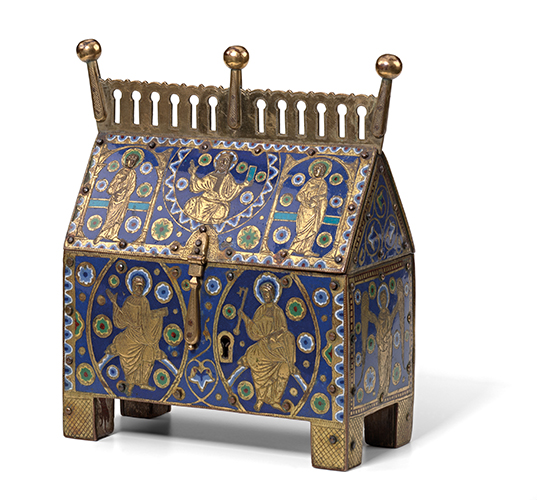
Image by Kelly Gardiner, from a work belonging to the Musée de Cluny, Paris.

This article appeared in Materiality #1: Book. If you enjoyed it, you might enjoy the whole shebang! Purchase a copy at the pinknantucket press shop. (Available in hardcopy and digital versions, $10/$3.95).

Get your crank on! Issue 1 of Crank is now for sale!

We are pleased to announce the release of the very first issue of Crank!

Crank is a sort of extended “letters to the editor”—a magazine in which one can air petty annoyances, obscure conspiracy theories and general arguments about what is wrong with the world.

In this issue, read Chris Miles on the evil that is “www.”, Jenny Sinclair on sources of annoyances at music festivals, David Sornig’s issues with the use of sunlight as a metaphor in song lyrics, and the lessons Mat Larkin learned from a particularly tricky “Choose Your Own Adventure” story. Other topics of author’s ire include poor quality shoelace aglets, icing turds, astrology, singing soap stars, and pandas.

We think Crank is the perfect read for everyone from the slightly grumpy to the total misanthrope. Perhaps you can think of someone or even several people who would enjoy a copy as a present! Actually, to be on the safe side you should probably buy them all two copies, so that after they tear up one copy in a fit of rage they still have another one to read.

You can purchase Crank as a hard copy + digital file bundle for $4.99 or in digital only form for $0.99. So much for so little! Visit the pinknantucket press shop and add it to your cart!

File formats available on purchase: pdf, epub, mobi. NB: The hard copy may not be entirely spittle-proof.

Fabulous cover image by @spikelynch. Pomegranates not included with purchase.

Fabulous cover image by @spikelynch. Pomegranates not included with purchase.